
Italian wall lizard research
How do introduced populations respond to new environments?
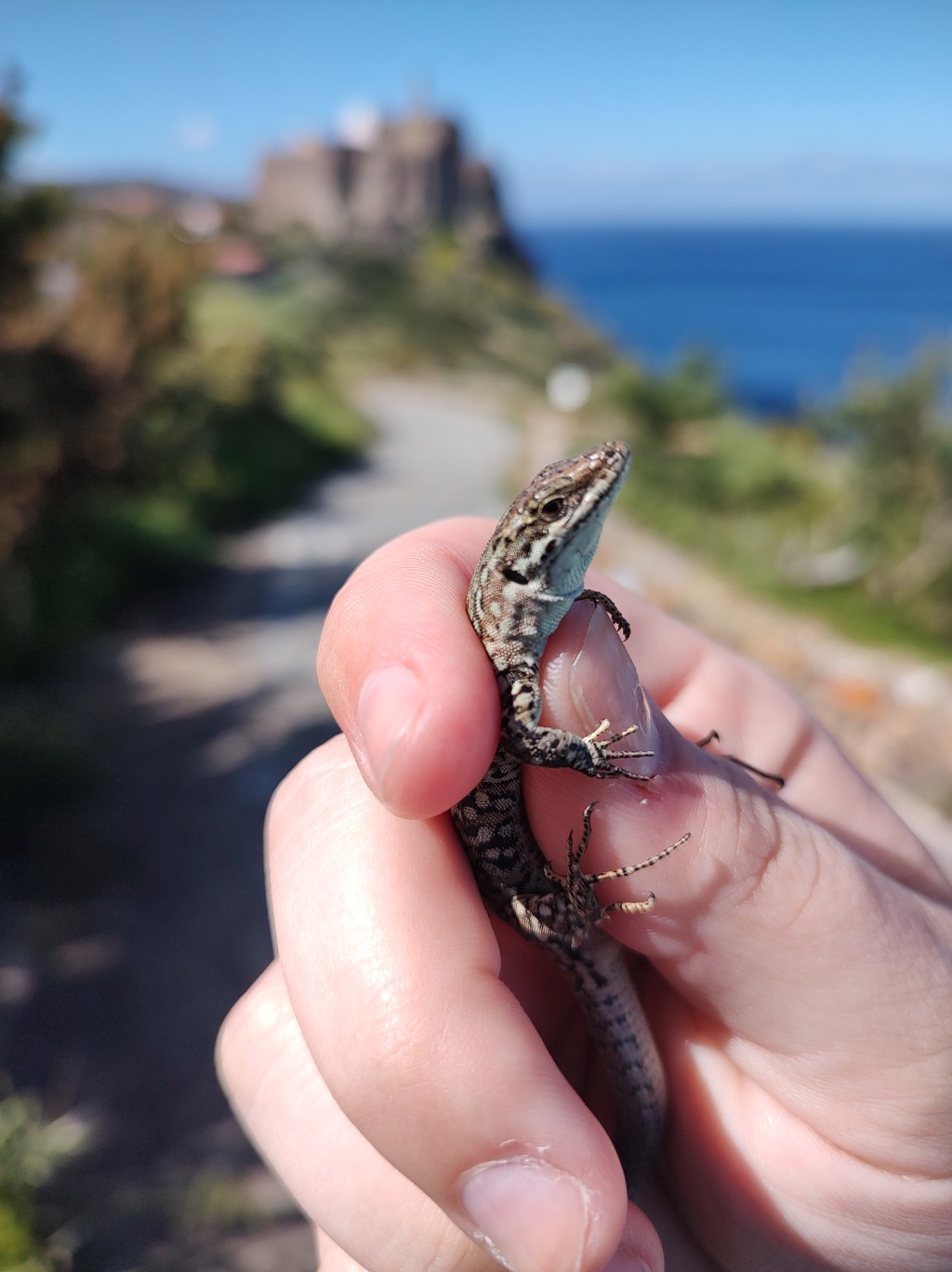
Breann studies how introduced populations of Italian wall lizards respond to new ecological conditions and how those responses can inform conservation. The research combines native-range baselines from Italy with comparisons among established populations in the United States. Behavior, habitat use, morphology, and distribution are examined together to determine which responses recur across introductions and which are specific to local environments and population histories.
Research questions
What changes after introduction?
Comparisons with native-range populations test whether introduced populations differ in behavior, habitat use, or morphology. The goal is to identify evidence of change without assuming that every population follows the same path.
Are responses repeated across introductions?
Independent populations in California, Kansas, Missouri, and New York provide opportunities to distinguish recurring responses from differences associated with local environments and population histories.
How do wall lizards use habitats shared with native species?
Field surveys examine fine-scale habitat use and the conditions under which Italian wall lizards occur alongside native lizards. Ongoing work evaluates coexistence and potential competition without treating co-occurrence alone as evidence of ecological impact.
How can research improve conservation decisions?
Distribution records, verified photographs, field surveys, and ecological comparisons identify where additional study is most useful. These data can support early detection and management decisions grounded in evidence.

Native-range baselines
Comparisons among mainland and island populations in Italy establish the range of variation found within native and long-established contexts. These baselines are essential because a difference observed in one United States population cannot be interpreted without understanding how much variation already exists in populations from the native range.
Standardized field observations, behavioral assays, habitat surveys, and morphological measurements make it possible to compare populations while retaining the ecological context of each location.
Connected lines of evidence
Behavior
Behavioral trials examine invasion-related behaviors. Repeated observations evaluate whether individual differences remain consistent over time.
Habitat use
Visual encounter surveys document occurrence and microhabitat use. Comparisons across locations test how habitat conditions and the presence of native lizards relate to where Italian wall lizards are observed.
Morphology
Geometric morphometric analyses quantify dorsal head morphology. Comparisons among populations and sexes evaluate how much variation is associated with population history, introduction status, and island or mainland geography.
Distribution and early detection
Italian wall lizards have records of introduction in 14 states. Compiled observations, field verification, spatial analyses, and developing image-based tools help distinguish individual reports from established populations and identify areas where follow-up surveys may be useful.
Community observations extend the field effort
Photographs submitted by community members help document possible locations, refine distribution records, and guide field verification. Clear images are useful, but blurry or partial photographs may still provide enough information for an initial identification.
Community participation connects public observations with testable ecological questions. Verified records can reveal where populations may be expanding and where comparisons with native species are most informative.

Unless otherwise noted, photographs are by Breann Richey. Photographs may not be reused without permission.
 Wall Lizards