Research is collaborative
People and collaborators
Our research depends on international fieldwork and coordinated collaboration between academic institutions, museums, and governments.
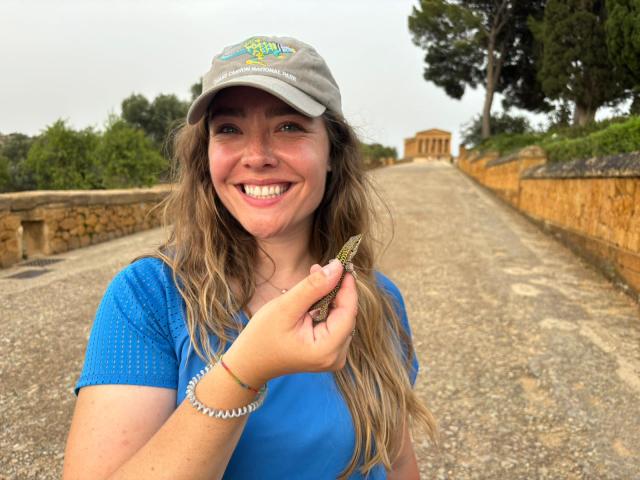
Breann Richey
Ph.D. candidate in Ecology and Evolutionary Biology at Texas A&M University
Breann studies how introduced populations of Italian wall lizards respond to new ecological conditions and how those responses can inform conservation. Her research combines native-range fieldwork in Italy with comparisons among populations in the United States. This work examines behavior, habitat use, morphology, distribution, and interactions with native species.
The research is designed to separate presence from ecological impact. Comparisons among populations help identify which responses recur across introductions, which depend on local conditions, and where additional monitoring or management may be warranted.
Breann also works with students and community partners to connect field observations with testable research questions. This collaborative structure expands the geographic reach of the work while supporting training in field methods, data analysis, and scientific communication.
Research team
Audra Hicks
Graduate student, Texas A&M University
Audra studies morphological responses and habitat use in Italian wall lizards, including developmental instability in Podarcis siculus.
Loris Di Vozzo
Ph.D. student, Texas A&M University
Loris studies herpetology, biogeography, and conservation biology, with research on morphological variation in lizards.
Michelle Lawing
Associate Professor, Texas A&M University
Michelle studies how species and ecological communities respond to environmental change across conservation biology, ecology, evolution, and paleontology.
A collaborative research network
Research collaborators
Collaborations with ecologists, evolutionary biologists, natural history collections, zoos, and wildlife professionals support comparisons across the native range and multiple introductions. These partnerships contribute local knowledge, field access, specimens, observations, and complementary expertise.
Student researchers and mentorship
Students contribute to field sampling, data organization, analysis, presentations, and manuscripts.
Community and conservation partners
Community members frequently provide the first photographs or local reports of wall lizards. Partnerships with observers, organizations, and agencies help verify records, identify questions that matter locally, and connect research findings with conservation decisions.
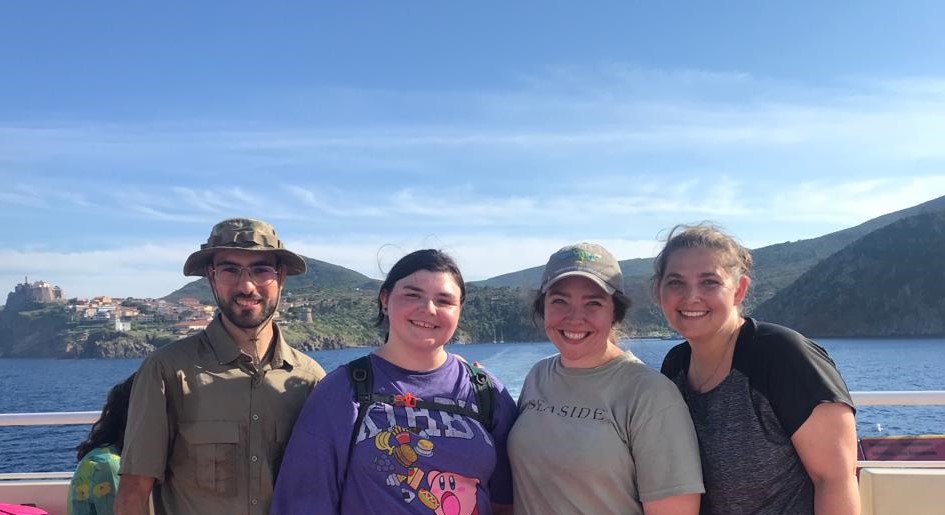
Working across places and perspectives
Wall lizard populations occur in varied ecological and social settings. Research across these locations is strongest when standardized methods are paired with knowledge from people who live and work nearby. That combination supports broader comparisons without losing the context of individual populations.
Unless otherwise noted, photographs are by Breann Richey. Photographs may not be reused without permission.
 Wall Lizards